

Biological Pest Control. Science-Backed. Field-Ready.
Seven products in development — entomopathogenic nematodes, microbial bionematicides, mycorrhizal biofertilizers, microbial biofertilizers, biological wastewater treatment, household drain care, and specialist turfgrass biologicals — built on decades of microbial science.
Three Categories. Seven Biological Solutions.
Select a product from any category to view full technical details, target pest species, and application guidance.
NemaForce™
Heterorhabditis bacteriophora
Entomopathogenic Nematodes
Precision biological control of soil-dwelling insect larvae.
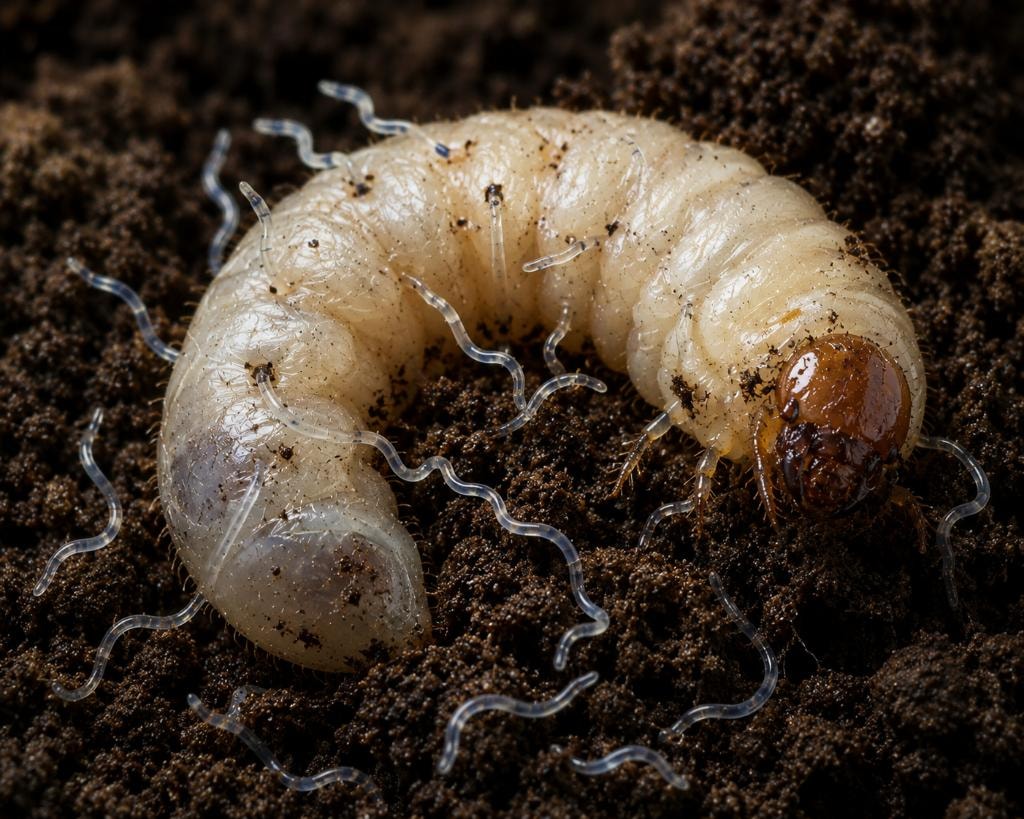
NemaForce™ is a concentrated suspension of Heterorhabditis bacteriophora infective juveniles — one of the most widely researched and field-proven entomopathogenic nematode species in commercial biological pest control. Formulated for broad-spectrum control of soil-dwelling insect larvae, NemaForce™ targets the pest at its most vulnerable life stage, in the soil profile where chemical options are increasingly restricted.
Mode of Action & Application
Infective juveniles are applied to moist soil via standard irrigation, drench, or spray equipment. Once in the soil, they actively seek out target larvae using chemical and thermal cues, penetrate the host, and release symbiotic Xenorhabdus bacteria that eliminate the pest within 24–48 hours. New nematode generations emerge and continue seeking pests, providing extended biological activity.
Target Pest Species / Problems
Vine Weevil larvae (Otiorhynchus sulcatus)
Leatherjackets (Tipula spp.)
Chafer Grubs (Melolontha / Phyllopertha spp.)
Cabbage Root Fly (Delia radicum)
Cutworm (Agrotis spp.)
Codling Moth larvae (Cydia pomonella)
Technical Overview
Active Organism
Heterorhabditis bacteriophora
Formulation
Concentrated aqueous suspension
Application
Irrigation, drench, spray
Residues
None
Resistance Risk
None
Crop Sectors
How Beneficial Bacterial Consortia Work
A four-stage biological process — from soil application to improved soil health and crop resilience.
Soil Application & Establishment
Bacterial consortia are applied as a soil drench, seed treatment, or incorporated at planting — establishing rapidly in the root zone and rhizosphere without specialist equipment.
Biofertiliser Activity
Beneficial bacteria fix atmospheric nitrogen, solubilise phosphorus, and produce plant growth-promoting compounds — directly improving nutrient availability and uptake for the crop.
Microbial Activity Enhancement
Introduced bacteria stimulate broader soil microbial communities, accelerating organic matter decomposition, nutrient cycling, and enzyme activity throughout the soil profile.
Soil Biodiversity & Resilience
Over time, bacterial consortia restore soil biodiversity, improve aggregate stability, and build a biologically active soil environment that supports long-term crop health and productivity.
Built on Science. Designed for Growers.
No Chemical Residues
Fully compliant with MRL requirements and premium market specifications — zero residue risk.
No Resistance Risk
Biological mode of action with no risk of resistance development, unlike synthetic alternatives.
EU Green Deal Aligned
Aligned with the Soil Strategy 2030, Farm to Fork, and Sustainable Use of Pesticides Regulation.
Safe for Beneficials
Highly specific to target pests — no impact on pollinators, earthworms, or beneficial soil organisms.
IPM Compatible
Integrates seamlessly into integrated pest management programmes alongside other biological controls.
Expert Support
Every product is backed by NemaCura agronomists — from pest diagnosis through to application guidance.
Interested in Our Products?
Register your interest, ask a technical question, or speak to one of our agronomists about your specific pest challenge.